Norridge, IL · Garage Door Service
Wind and Your Wide Garage Door in Norridge
Norridge sits a mile from O'Hare on open flat ground, and most garages here still have original 1960s-70s doors with no wind strut. Here's what that means for you.
- Repairs & new doors
- Springs & openers
- Serving 4 nearby communities
What Is Going On
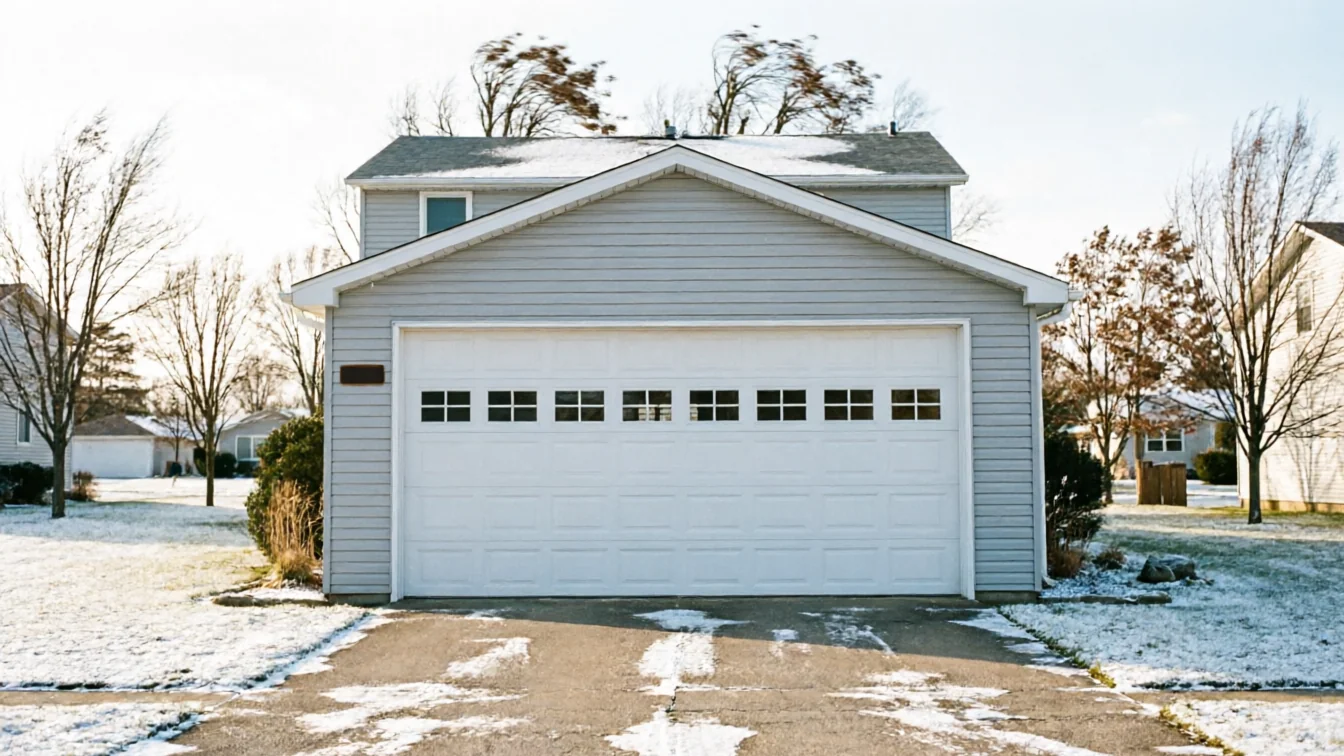
A double garage door is the biggest moving panel on most houses, and a gust hits it the way it hits a sail - pushing flat against the whole surface at once instead of sliding past like it does on a wall. Houses in Norridge were built mostly between 1938 and 1994, with the heaviest concentration going up in the 1960s and 70s and a median build year around 1967. That matters here specifically because doors from that era - one-piece panels or early steel sectionals - were rarely built with a horizontal strut running the full width of the door. That strut is what keeps a wide panel from bowing out in the middle under wind pressure. Without it, a hard gust pushes the center of the door forward while the track still holds the edges, and the panel can pop a roller out of the track or crack along a seam. This isn't a defect so much as the standard of the time. Doors built to that spec were sized for the opening, not for sustained wind load, because wide-door wind bracing wasn't a common add-on until later decades. If your house falls in that 1938-1994 window, which covers most of this area, there's a decent chance your door is original hardware doing a job it wasn't built for.
What You Pay
We don't have a flat number to hand you here, and giving you one would be a guess dressed up as a fact. What we can tell you is the shape of the decision: reinforcing an existing double door with retrofit struts is a smaller job than replacing the door outright, and it's worth doing on a door that's otherwise sound - good panels, good track, no rust through the steel. If the panels are already bowed, cracked, or the steel has thinned, reinforcing it just moves the failure point somewhere else. At that stage replacement is the honest answer, even though it costs more up front. With 82,048 owner-occupied houses across this service area and a median household income of $108,833, most owners here are in a position to choose the repair that actually lasts rather than the cheapest patch. Ask for both options when you call - reinforce versus replace - and ask why, specifically, for your door.
What Local Conditions Do
Norridge sits about a mile southeast of O'Hare, which means flat, open ground with nothing much to slow wind down before it reaches a house. That's not a weather event, just geography - the same open approach pattern that lets planes land here lets gusts move across neighborhoods unobstructed. Combine that with a climate band on the cold side of moderate, where winter temperature swings are routine, and you get a second problem layered on the first: steel contracts in the cold. A track that's slightly out of plumb to begin with gets tighter in January, and a door under wind stress is more likely to bind or jump a roller on the side where the track has pulled in. Neither of these facts alone would wreck a door. Together, on a panel that's forty or fifty years old with no reinforcement, they're the two things most likely to turn a strong gust into a service call.
Checking It Yourself
Open the door and look across the back of the top two panels for a horizontal strut - a steel bar bolted across the full width. If you don't see one on a double door, that's the gap we're talking about. Next, run your hand along the vertical tracks on both sides and check that the bolts holding the track to the framing are snug, not just present. A loose bracket is often the first thing to give before a panel does. Look at the bottom corners of each section for daylight gaps or visible bowing when the door is closed - a slight bow that straightens out when you push on it from outside is worth flagging. Finally, check the rollers where they sit in the track; a roller that's worn to an oval shape instead of round won't hold under side-load the way a round one does. None of this requires tools. If you find a gap, a bow, or a bare track with no strut, that's the call to make before the next windy stretch, not after.
Frequently asked questions
Do all the garages in Norridge have this problem?
Not every house, but a good share of them. Housing here was mostly built between 1938 and 1994 with the thickest cluster in the 1960s and 70s, and doors from that stretch commonly shipped without a wind strut. If your door and track are original to a house from that window, it's worth a look.
Can I just add a strut myself?
You can buy retrofit struts, but they have to be sized and placed correctly or they don't do much. We'd rather look at the panel and track first - on a door that's already bowed or rusted through, a strut alone won't fix the underlying problem.
Is this worse because we're near O'Hare?
The open, flat ground around here means less is breaking up wind before it reaches a house, which is part of why wide doors without bracing are more exposed than they'd be somewhere with more windbreaks. It's a layout fact, not a weather forecast.
How do I know if I need a new door instead of a repair?
If the panel is bowed enough that it doesn't flatten back out, or the steel has rust you can push a finger through, reinforcing it just shifts the weak point elsewhere. At that stage replacement holds up better long term, even though it costs more up front.
Related garage door services in Norridge
More garage door guides
Book garage door service in Norridge
Call now or request a quote - tell us what the door is doing and where you are.