Norridge, IL · Garage Door Service
Garage Door Help for River Grove's 1960s Homes
We travel 3 miles from Norridge to River Grove, where most homes date to 1961 and run original torsion hardware that needs matching, period-correct parts.
- Repairs & new doors
- Springs & openers
- Serving 4 nearby communities
What We Will Not Take On
We don't claim a shop or crew stationed in River Grove - we run out of Norridge, three miles up the road, and we're upfront about that rather than pretending to have a local address we don't have. We also won't promise same-day service on every call; if a spring breaks on a holiday evening, the truck that gets to you fastest isn't guaranteed to be ours, and we'd rather say that than overpromise.
We don't take on new-construction installs for custom carriage doors outside our stocked lines, and if a panel is a discontinued profile from a manufacturer that's been out of business for decades, we'll tell you replacement is the honest answer rather than hunt for a part that doesn't exist anymore.
And we don't recommend repair over replacement just to land a sale. On a door built the way most River Grove garages were built, around 1961, sometimes the frame itself has shifted enough that a new spring just buys you six more months of the same problem. We'd rather say that up front than have you call us back in the spring.
How That Shows Up in the Door
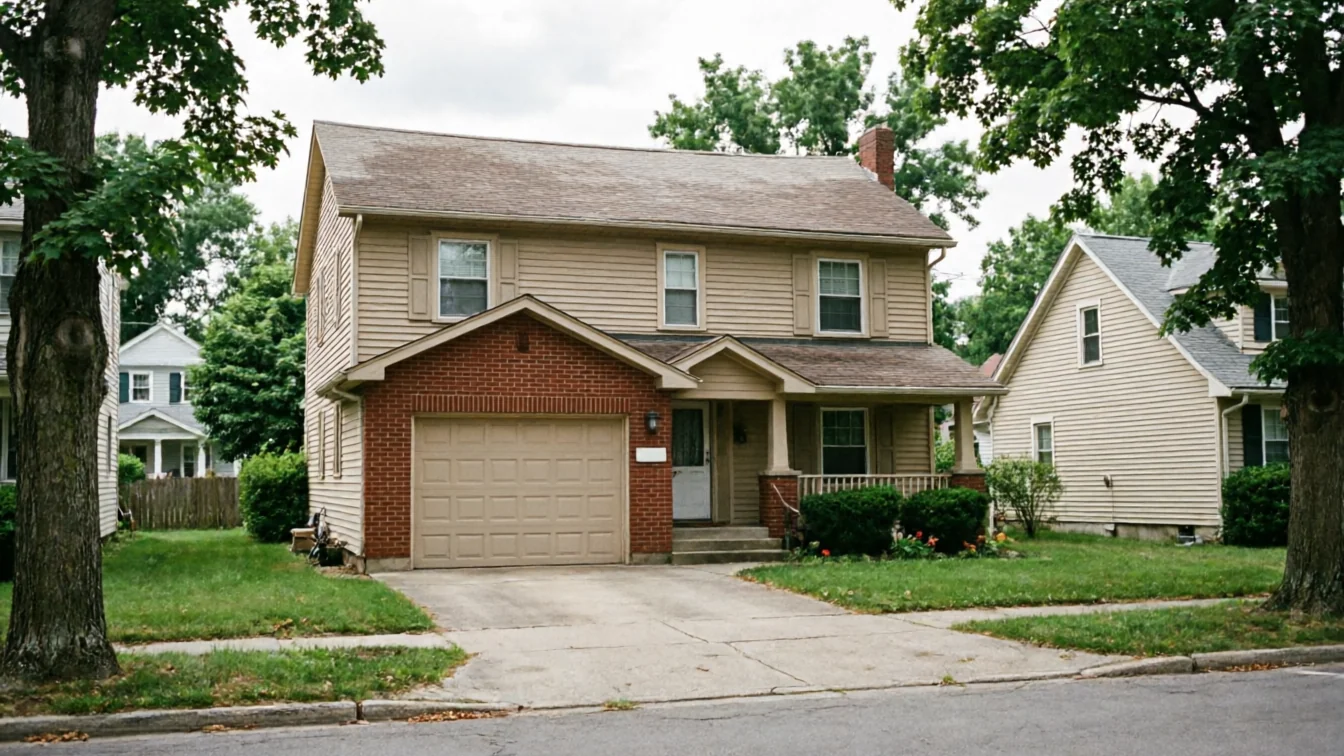
River Grove's housing stock runs a touch older than the broader service area average - most lots here were built around 1961, a few years ahead of the territory-wide median of 1967. That gap matters more than it sounds.
Doors installed on those earlier builds were more often steel sectional panels on side-mounted torsion springs bolted directly to the header, not the center-mounted torsion bar that became standard later in the decade across the rest of the area. The hardware looks similar from the driveway, but the parts aren't interchangeable, and a tech who shows up assuming center-mount hardware wastes a trip.
On these older setups we also see thinner-gauge steel panels than later builds, since insulated doors didn't become common at this price point until the 1970s. That means more dents, more rust along the bottom panel where decades of slush and road salt have sat, and hinges that have been painted over so many times they're seized rather than worn. None of this is dramatic - it's just what an extra few years of one specific build era does to a garage door nobody's touched since the house went up.
What Neighbours Usually Call About
Given the age of the stock, the calls we get from River Grove skew toward a few repeatable problems: a torsion spring that's finally given out after years of carrying a heavier original steel door, a cable frayed at the drum from an opener bracket that was never quite aligned, or rollers that have worn their track grooves wide enough that the door rattles on the way up.
Openers get replaced here more than repaired. A chain-drive unit from the 1990s or earlier usually isn't worth rebuilding once the circuit board fails, and parts for those models are getting hard to source.
We also hear from owners dealing with a door that won't seal at the bottom, which in a cold-moderate climate means a cold garage floor and a draft that reaches the house side of an attached garage. Less common, but it comes up: a panel that's been backed into and needs matching to a run that's been out of production for years, where the honest move is replacing the whole section rather than chasing a single panel that won't quite match the color or profile.
This Area's Housing
River Grove is a small, settled community - about 4,106 households sit roughly three miles from our Norridge base, with a median household income of $74,793, well below the $108,833 median across the wider 53-town service territory. That income gap shows up in the decisions people make here: more owners choose a straightforward torsion spring repair over a full door replacement, and more ask about mid-grade steel doors rather than the insulated wood-look lines that see more traffic in wealthier parts of the territory.
The housing itself fits the broader area's pattern of construction between 1938 and 1994, with most of the territory concentrated in that 1960s-70s band generally - but River Grove's own median sits at 1961, a few years ahead of the area-wide median of 1967, and that's the detail that drives most of what shows up on a service call here.
Winters fall into the same cold-moderate band as the rest of the territory, so the freeze-thaw cycle that stresses springs and seals everywhere else in the service area stresses them here too, just on hardware that's a few years older on average than the typical job across the rest of the territory.
Frequently asked questions
Do you have a shop in River Grove?
No. We run out of Norridge, about three miles away, and send a truck out for calls in River Grove rather than keeping a separate location here. The distance is short enough that it doesn't change how we schedule or price a job.
Why does my garage door look different from my neighbor's newer door?
Most of River Grove was built around 1961, a few years before center-mounted torsion hardware became standard across the rest of the area. If your house is original, you likely have side-mounted torsion springs on a heavier steel panel than homes built later in the same decade.
Is it worth repairing a 60-year-old garage door?
Often yes - the steel itself usually outlasts the springs, cables, and rollers around it. But if the frame has shifted or the bottom panel is rusted through, replacement usually costs less over time than repeated patch repairs on an old door.
How does the cold affect an older garage door here?
Cold-moderate winters crack old weatherstripping and stiffen springs, which is why a door that worked fine in October sometimes won't budge by January. On 1960s-era doors without factory insulation, that also means a noticeably colder garage floor.
Garage door services in River Grove
Every service our crew runs in River Grove, IL.
Book garage door service in Norridge
Call now or request a quote - tell us what the door is doing and where you are.