Norridge, IL · Garage Door Service
Why Older Norridge Garage Doors Slip Off Their Tracks
Norridge homes built mostly in the 1960s and 70s see off-track doors from aging hardware and cold-weather strain. Here's what causes it and what to check.
- Repairs & new doors
- Springs & openers
- Serving 4 nearby communities
What Is Going On
Most houses in Norridge went up between 1938 and 1994, with the typical build year sitting around 1967. Across the wider service area, the stock is overwhelmingly 1960s and 70s construction. That matters because a door going off track almost never happens on its own - it happens because something holding the track in place has worked loose over decades.
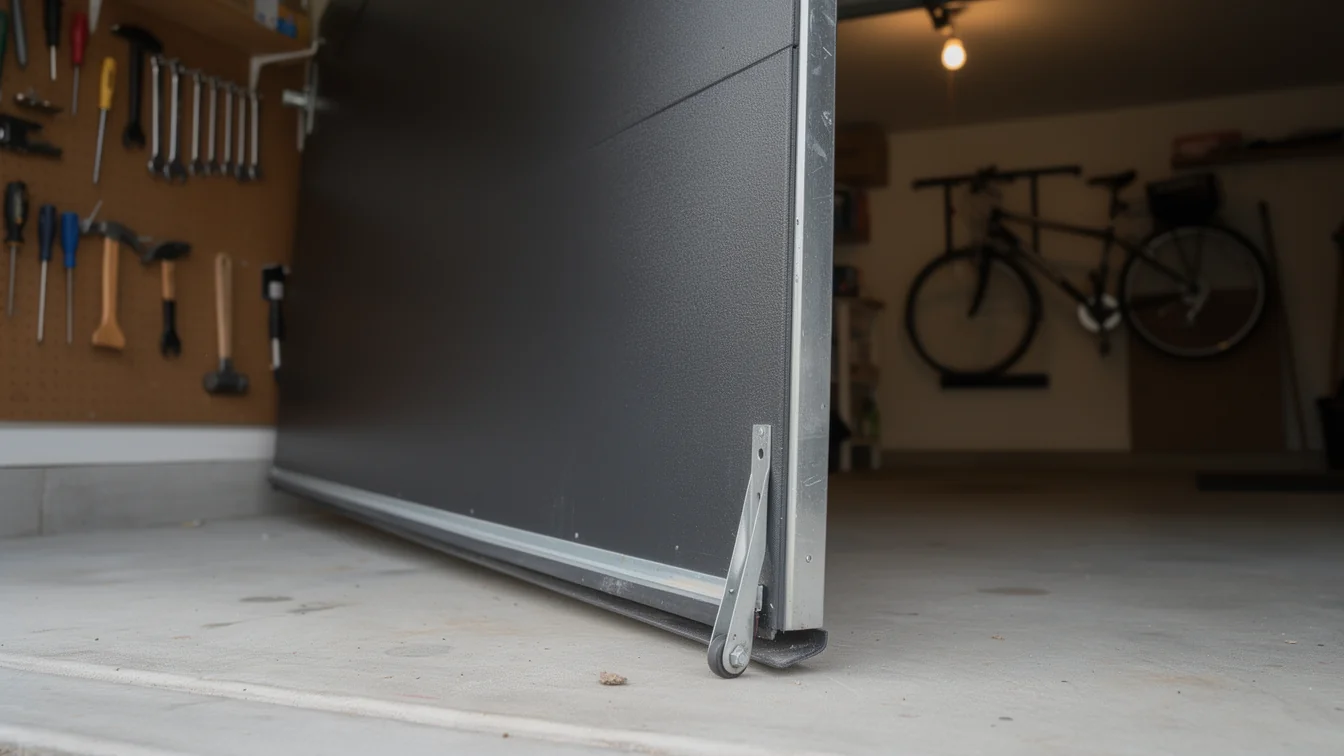
In houses from that era, track brackets were lag-bolted straight into framing, often without the shims or reinforcement you'd see in newer construction. Fifty-plus years of the house settling, the garage door opening and closing thousands of times, and the wood framing shrinking a little each heating season adds up. One bracket pulls a quarter inch away from the stud, the track tilts, and the rollers start riding the edge instead of the channel. Eventually a roller jumps clean out, usually on the bottom panel where the door takes the most stress opening against gravity.
It can also happen faster - a car bumper tap, a board leaned against the track, a spring that's lost tension and let the door drop crooked. But in this housing stock, the slow version, loose brackets and tired hardware, is what we see on the older side of town far more than anything sudden.
What You Pay
We're not going to put a flat number here, because an off-track door covers a lot of ground. Sometimes it's a bent track section and a couple of roller replacements, a short job. Sometimes the door came off because a cable snapped or a spring let go, and now you're also looking at spring or cable work on top of the track repair. Those are different jobs with different parts and different time on site.
What we can tell you honestly: if the track is just bent or a bracket pulled loose, that's usually a repair, not a replacement. If the door panels are bent from riding off the track for a while, or the opener forced itself against a stuck door repeatedly, the damage can spread to the opener's gears and that changes the math. We look at it in person before we say what it needs, because guessing over the phone usually ends up wrong in one direction or the other.
The honest limitation here: we don't do flat-rate phone quotes on anything beyond a basic service call, because the condition of fifty-year-old hardware varies too much house to house for that to be fair to you.
What Local Conditions Do
Norridge sits in a cold-moderate climate band, which means repeated freeze-thaw cycles every winter rather than one hard freeze that stays put. That cycle is harder on wood-framed garages than steady cold would be. The framing around the track brackets expands slightly when it warms and contracts when it drops back down, over and over, all winter. On a house built before 1980, that's forty-plus winters of movement on hardware that was installed once and never revisited.
Lag screws back out a sixteenth of an inch at a time. You don't notice it until the track is visibly out of plumb or a roller starts catching. Cold also stiffens the springs and makes the door heavier to lift for the first cycle of the day, which puts more load on a track that's already slightly out of alignment - a bad combination that tends to be when the roller finally jumps.
We don't get the kind of brutal sustained cold that cracks concrete footings overnight here, so this isn't a dramatic failure. It's a slow one. That's actually good news: caught early, a loose bracket is a five-minute fix. Caught late, after a winter or two of riding crooked, it's a track replacement.
Checking It Yourself
Before you call anyone, a few things take less than five minutes. Stand at the side of the door and sight down the vertical track on each side - in houses from the 1960s and 70s building boom that makes up most of this area, the common failure is one track leaning out at the top where the bracket meets the framing. If you can see daylight or a visible gap between the bracket and the stud, that's your answer.
Next, check the lag screws at each bracket with your hand, not a tool - if one turns with finger pressure, it's backed out. Don't crank it tight with a drill; stripped-out holes in old framing need a longer screw or a repositioned bracket, not more torque on a hole that's already worn.
Last, open the door halfway and look at the rollers. If one or more sits outside the track channel rather than inside it, stop using the opener. Running the door further on a jumped roller bends the track and turns a bracket fix into a track replacement. That's the one thing we'd ask you to not try to force through on your own - a door that's partway off track should stay put until someone looks at it.
Frequently asked questions
Why did my garage door suddenly come off the track with no warning?
It usually wasn't sudden. In houses from the 1960s and 70s, a bracket loosens gradually over years of seasonal framing movement, and the door rides slightly crooked for a while before a roller finally jumps clear. The jump feels sudden; the cause built up over winters.
Can I push the door back onto the track myself?
If only a roller slipped and the track itself isn't bent, sometimes yes, carefully, with the opener disconnected. But if the track is visibly bowed or a bracket has pulled away from the framing, forcing the door back on usually bends it further. Worth having it looked at first.
Does the cold weather here actually cause this?
Indirectly, yes. Norridge sits in a cold-moderate climate band with repeated freeze-thaw cycles each winter, which works lag screws loose in older framing over time. It's rarely one cold snap doing the damage - it's decades of that cycle repeating.
Is it ever cheaper to replace the whole door instead of fixing the track?
Sometimes, if the panels are already bent from riding off track or the opener's gears took damage forcing against a stuck door. We won't know which situation you're in until we see it, which is why we look before quoting.
Related garage door services in Norridge
More garage door guides
Book garage door service in Norridge
Call now or request a quote - tell us what the door is doing and where you are.