Norridge, IL · Garage Door Service
Garage Doors on Norridge's Older Housing Stock
Norridge homes built mostly 1938-1994 carry doors and hardware matched to that era. Here's what actually goes wrong, what drives cost, and what to check yourself first.
- Repairs & new doors
- Springs & openers
- Serving 4 nearby communities
What Is Going On
Most of Norridge went up between 1938 and 1994, with the median house dating to around 1967. That matters more than people think. A door installed on a house built in the 1960s or early 70s was almost always sized and hung for the hardware common then - lighter steel sections, smaller torsion springs, and openers that came along later as retrofits. When a spring breaks or a panel cracks on one of these houses, you're not just replacing a part, you're often working around an opening and track setup that predates the door itself.
We see this across the older pockets of town and in the surrounding areas that share the same building era - 53 named neighborhoods in this part of the county went up in roughly the same wave, mostly 1960s and 70s construction. The doors themselves have usually been swapped once or twice by now, but the tracks, jambs, and in some cases the header framing are original. That mismatch between new door and old opening is where a lot of service calls start - a door that looks fine from the driveway but binds, drifts off the track, or won't seal because the opening shifted slightly over fifty-plus years.
This isn't a defect story. It's just what happens to a structure and its hardware over six decades, and it's worth knowing before you call anyone out for a quote.
What You Pay
We don't publish flat prices here because the two biggest cost drivers on a Norridge job aren't the door - they're the opening and the spring size, and both depend on what's actually behind your current panel. A straightforward spring swap on a door that's already true and square costs a lot less than a job where the track has to be reset because the house settled since 1967.
What we can tell you honestly: if your opener is original to a 1960s or 70s install, replacing it usually costs less in the long run than keeping it alive, since parts for that generation of hardware are getting harder to source. We'll quote both options and tell you straight which one makes sense for your specific door - we're not going to sell you a new opener if a $30 part fixes the one you have.
The other driver is insulation. Houses built before insulation rules kept heat inside the house, not the garage, so a lot of Norridge garages were never built to hold temperature. If you're finishing that space now or just tired of a cold wall next to the kitchen, an insulated door costs more upfront but changes what that room feels like in January. That's a choice, not a requirement - plenty of owners skip it and that's fine.
What Local Conditions Do
Norridge sits in a cold, moderate climate band, which means real freeze-thaw cycling every winter rather than one hard freeze and done. That cycling is harder on garage door hardware than people expect. Steel tracks contract in the cold and expand again on the warm days in between, and on an older house where the opening has already shifted a little from decades of settling, that seasonal movement is what knocks a door out of alignment or snaps a spring that was already near the end of its life.
On houses built before insulation rules - which describes a good share of the 1938-1994 stock here - the garage often runs close to outdoor temperature. That's hard on steel springs and on any rubber seals at the bottom of the door, since rubber stiffens and cracks faster when it's swinging through a 40 or 50 degree range every few days instead of staying stable.
None of this means your door is failing because something's wrong with it. It means a door on a 55-year-old opening in this climate works harder than the same door would somewhere with a milder winter, and the wear shows up on a predictable schedule rather than at random.
Checking It Yourself
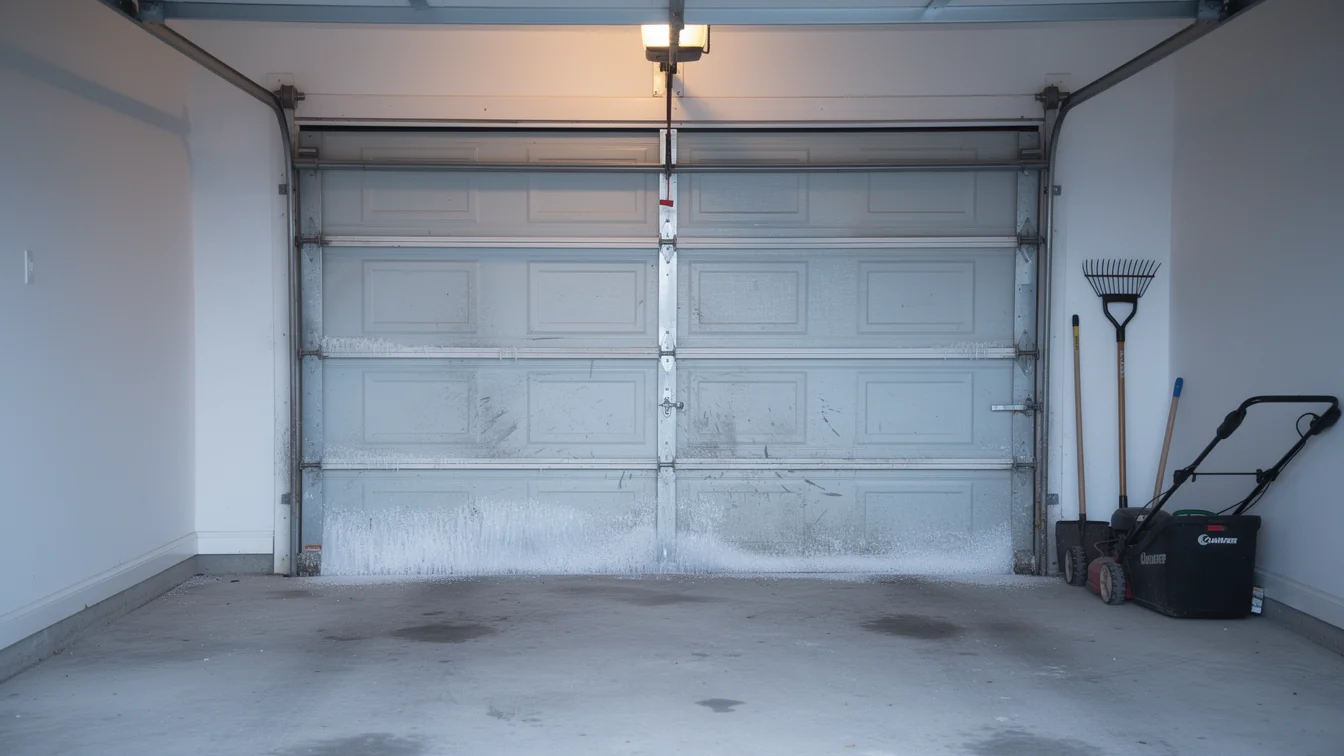
Before you call anyone, a few things you can check in five minutes. Stand inside the garage with the door down and look at the gap along both sides where the door meets the track - on an older opening, an uneven gap (wider at the top on one side than the other) usually means the frame has racked slightly over the years, not that the door itself is bad. Look at the bottom seal too; if it's cracked or flattened on one side, that's a sign it's been fighting cold-season stiffening longer than it should.
Pull the manual release and lift the door by hand. It should move smoothly and stay roughly where you let go. If it crashes down or takes real effort to lift, the spring is losing tension - don't keep opening it with the opener motor doing that work, since that's how a spring failure turns into a cable or track problem too.
One honest limitation: we can't tell you from a phone description whether it's the spring, the opener, or the opening itself. Houses on the same block built in the same year can have completely different wear depending on what's been replaced and when. A real look at the hardware is the only way to know for sure.
Frequently asked questions
Why does my garage door feel harder to lift in winter?
In a cold, moderate climate like Norridge's, steel springs lose some tension as temperatures drop, and that effect is more noticeable on older torsion hardware common in houses built in the 1960s and 70s. If it's crashing down fast rather than lowering smoothly, the spring is likely near failure, not just stiff from cold.
Is my garage door opening original to the house?
If your house dates to the median build year around 1967, it's possible the framing and track position are original even if the door and opener have been replaced since. That's common across Norridge's older housing stock and it's worth mentioning when you call for a quote.
Should I insulate my garage door?
Many Norridge garages sit on houses built before insulation rules existed, so the garage was never meant to hold heat. Insulating the door helps if you use that space often or it borders a living area, but it's an upgrade, not something broken that needs fixing.
Related garage door services in Norridge
More garage door guides
Book garage door service in Norridge
Call now or request a quote - tell us what the door is doing and where you are.