Norridge, IL · Garage Door Service
Is Your Old Garage Door Worth Fixing or Replacing?
Most Norridge houses date to 1938-1994, median 1967, so a lot of doors out there are original or close to it. Here's how to tell what's worth repairing.
- Repairs & new doors
- Springs & openers
- Serving 4 nearby communities
What Is Going On
Norridge housing mostly went up between 1938 and 1994, with the median build year sitting around 1967. That puts a huge share of garage doors in this town somewhere between 30 and 55 years old, and a lot of them are either the original door or a one-time replacement from decades back. Across the wider area, the stock leans 1960s-70s construction, which means the garage openings themselves tend to be a standard size built for the doors of that era - steel sectional or the older wood-panel styles, usually on extension spring setups rather than the torsion hardware you see in newer construction.
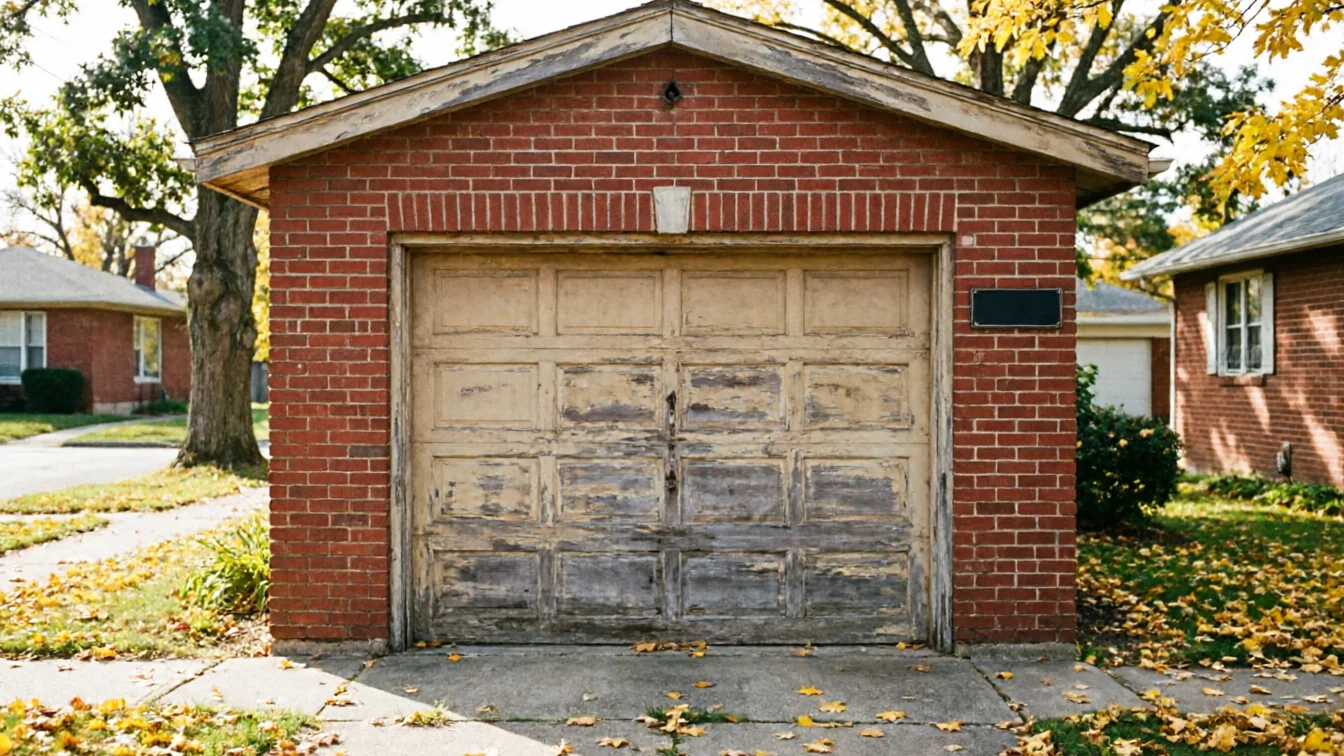
That age matters because parts drift out of production. A track bracket or a specific panel profile from a 1965 door isn't something a supplier keeps on the shelf. Sometimes we can patch a section or swap a roller and get another five years out of it. Other times the door is structurally fine but the hardware underneath it - hinges worn oval, cable fraying at the drum, a spring that's been stretched past its rated cycle count - has reached the point where fixing one thing just exposes the next.
The honest answer is that age alone doesn't decide it. A well-maintained door from 1970 can outlast a cheap one installed five years ago. What decides it is condition, not the number on the build date.
What You Pay
We don't publish a flat price here because what a repair costs depends entirely on what's actually wrong - a broken spring, a bent track, a panel that's rusted through at the bottom where it sits closest to grade. On a door built when this neighborhood was mostly going up (1938-1994), you're also sometimes paying for the time it takes to source a part that matches an opening size or panel style nobody makes anymore, rather than just swapping in a stock piece.
The honest limitation here: if a part isn't available for a door that old, repair isn't always the cheaper option once you add up patch after patch. We'll tell you straight if we think you're a year or two from needing a full replacement anyway, rather than billing you for a string of small fixes that don't hold.
What Local Conditions Do
Norridge sits in a cold, moderate climate band - real winters, real temperature swings through the shoulder seasons. On a door that's 40 or 50 years old, that cycling is what actually does the damage, more than any single storm. Steel panels contract in the cold and expand again in warmer months, and on original hardware from the 1960s-70s era, that repeated movement is what finally cracks old weld points, loosens hinge screws, or hardens up lubrication in a spring that hasn't been serviced in years.
Extension springs on older doors in this climate band tend to lose tension gradually rather than snap outright, so a door that's gotten noticeably heavier to lift by hand over a winter is usually telling you the spring is near the end of its life, not that something sudden happened. Same with track alignment - cold makes steel brittle enough that a track bent slightly out of true in October is a lot more likely to bind or jump by February. None of this is unique to one house; it's just what happens to a 50-year-old door in a place that sees a real winter every year.
Checking It Yourself
Before you call anyone, there's a quick way to get a read on whether your door is worth fixing. Disconnect the opener (pull the release cord) and lift the door by hand. It should move smoothly and stay roughly where you leave it, balanced. If it's heavy, drops on its own, or feels like it's fighting you, that's spring tension, not an opener problem - and on a door from the 1960s-70s era common in this area, that's often original or near-original hardware finally giving out.
Next, look at the bottom panel and the rollers. Rust-through at the bottom edge, especially where the door sits closest to the slab, is common on older steel doors in a climate with real winters - road salt and moisture do that over decades. Rollers that are cracked, chipped, or loose in the track are cheap to replace and don't necessarily mean the door is done.
What you can't safely check yourself: the spring itself. Don't loosen or remove it. Extension and torsion springs hold real force, and on an older unit you don't know the fatigue history of, that's not a DIY repair.
Frequently asked questions
My garage door is from the 1960s - is it too old to fix?
Not necessarily. Age tells you what era of hardware you're dealing with, not whether the door is sound. If the panels aren't rusted through and the frame is square, a door from that era can often be serviced rather than replaced. We'd look at the specific wear before recommending either way.
Why does my old door feel heavier in winter?
In Norridge's cold climate band, steel contracts and spring tension can read differently in cold weather, and years of that cycling wears extension springs down gradually. A door that's gotten harder to lift by hand over a winter usually means the spring is near the end of its service life.
Can you still get parts for a door built in the 1960s or 70s?
Sometimes, sometimes not. A lot of houses in this area have doors from that period, and some panel styles and track hardware are out of production. We'll tell you honestly if we can source a match or if replacement makes more sense than chasing discontinued parts.
Related garage door services in Norridge
More garage door guides
Book garage door service in Norridge
Call now or request a quote - tell us what the door is doing and where you are.