Norridge, IL · Garage Door Service
What a Service Call Actually Covers in Norridge
A look at what Norridge Garage Door Pros actually checks on a service call, tied to the 1960s-70s housing stock and cold-climate wear common around Norridge.
- Repairs & new doors
- Springs & openers
- Serving 4 nearby communities
What Is Going On
Most houses in and around Norridge went up between 1938 and 1994, with the bulk of the stock dating to the 1960s and 70s. That matters because a door built or replaced during that stretch is usually on torsion hardware that's been through forty or fifty winters, or it's an extension-spring setup on an attached garage that was never meant to carry an insulated panel door.
When we get a call, we're not guessing at what we'll find. A door this age is either original - meaning the track, rollers, and spring are all original-spec and likely undersized for a heavier replacement panel someone bolted on later - or it's a mid-life replacement that was installed to fit an opening that's shifted slightly as the slab settled. Both show up constantly across the 53 named areas we work in.
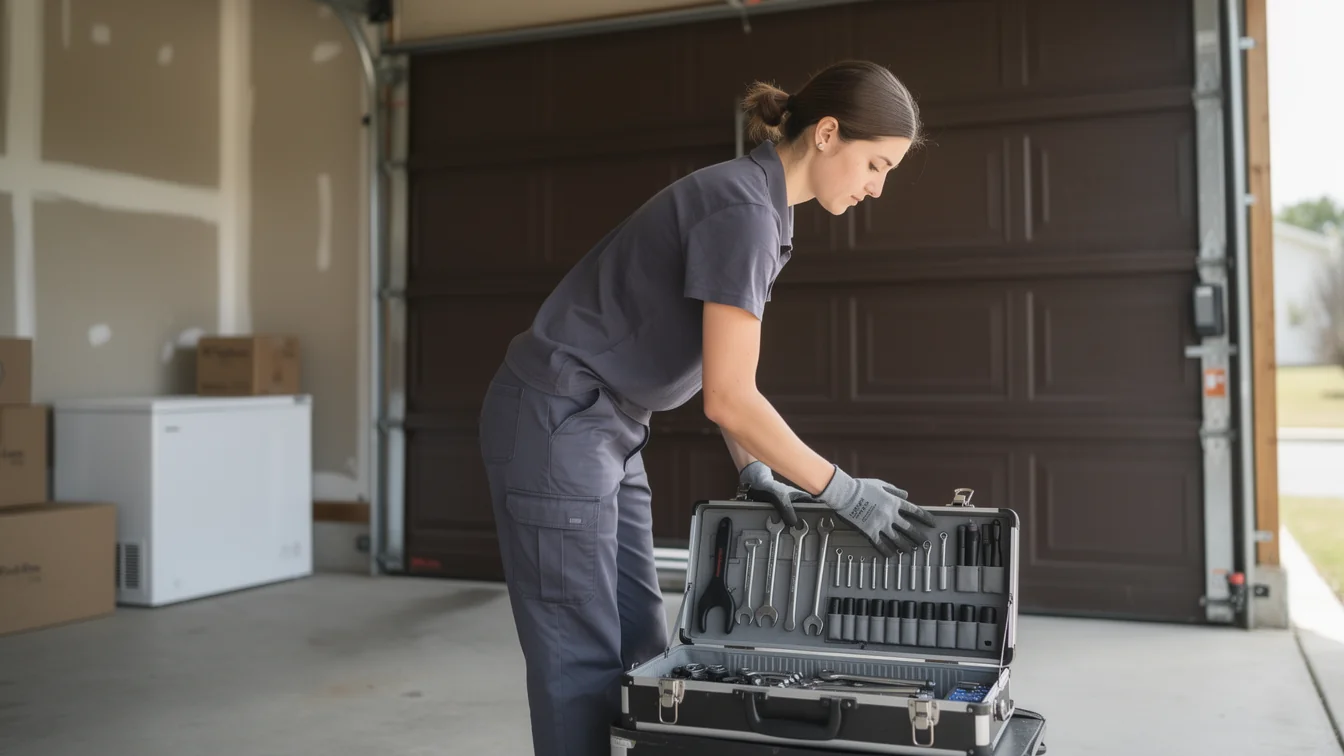
A service call starts with the obvious: does the door open and close under its own power, or is someone muscling it. From there we check balance, spring tension, cable wear, and whether the opener's force settings have been cranked up to compensate for something mechanical that's actually failing. That last one is common and it's also how people end up with a bent track they didn't know they had.
What You Pay
We're not going to put a number here that doesn't apply to your door. Cost depends on what's actually wrong, and on a door this old the two most common jobs - a torsion spring swap and a full set of rollers and cable - are priced differently depending on spring size, drum type, and whether the opener needs reprogramming after.
What we can tell you: homes here sit at a median household income of $108,833, and across the broader service area there are 154,526 households with 82,048 owner-occupied houses. That's a lot of garages built to the same era and the same handful of door widths, which means we see repeat patterns often enough to quote accurately once we're looking at the actual spring and track, not guessing over the phone.
The honest limitation: if your door is original to a 1960s build and the torsion tube or the jamb bracket has rusted through, repair sometimes costs more than a straight replacement once you add it up. We'll tell you that on site instead of nursing a door along for another year.
What Local Conditions Do
Norridge sits in a cold moderate climate band, which means real freeze-thaw cycling every winter, not just a few cold weeks. That cycling is hard on garage doors in a specific way: steel contracts, lubricant stiffens, and nylon rollers that were fine in October start binding in January. On an older torsion spring, cold also changes how much force it takes to lift the door, which is why a lot of our winter calls are doors that "got heavy" seemingly overnight.
Garages built in the 1960s and 70s era that dominates this area often weren't insulated to a modern standard, so the door itself is doing more thermal work than it was designed for. Weatherstripping at the bottom panel and the side tracks wears faster here than it would in a milder climate, and a worn seal lets in enough moisture to accelerate rust on cable and hardware that's already decades old.
We check seal condition, hinge corrosion, and track alignment as a matter of course on a cold-season call, because in this climate those three things fail together more often than separately.
Checking It Yourself
Before you call anyone, there are a few things worth looking at, especially on a door that's original to its build era. Pull the release handle with the door down and try lifting it by hand - a balanced door should rise with one hand and stay roughly level when you let go partway. If it drops or jerks, the spring is doing less work than it should.
Look at the cables on either side of the door near the bottom bracket. Frayed strands or visible rust, especially after a hard winter, means replacement is coming regardless of whether the door still runs.
Check the weatherstripping at the floor. On a lot of the older housing stock around Norridge, that strip was never replaced after the original install, and a cracked or flattened seal is an easy, cheap fix that saves the hardware above it from extra moisture.
What you shouldn't do yourself: touch the torsion spring itself. It's under enough tension to cause serious injury, and that's true on every door we've described here, old or new.
Frequently asked questions
Why does my garage door feel heavier in the winter?
Cold affects torsion spring tension and stiffens lubricant on rollers and hinges. In the cold moderate climate band Norridge sits in, that seasonal swing is real and repeats every year, which is why a door that opened fine in September can feel like it's fighting you by January.
Is my door old enough to need replacement instead of repair?
If your house dates to the common 1960s-70s build era around Norridge, the door hardware may be original. We check the spring, track, and jamb bracket condition on site - sometimes repair makes sense, sometimes the rust or wear means replacement is the better money.
Do you serve areas near Norridge like Harwood Heights or Schiller Park?
Yes, our service area covers Norridge and the surrounding towns including Harwood Heights (1 mile), Schiller Park (2 miles), and dozens of other named communities within roughly a 12-mile radius.
What's included in a standard service call?
A balance check, inspection of springs, cables, rollers, and track alignment, and a look at opener force settings and weatherstripping. We diagnose on site before quoting any repair so you're not paying for guesswork.
Related garage door services in Norridge
More garage door guides
Book garage door service in Norridge
Call now or request a quote - tell us what the door is doing and where you are.