Norridge, IL · Garage Door Service
Why Garage Doors in Norridge Let in Cold Drafts
Most Norridge garages were built in the 1960s and 70s, and original weather seals rarely survive this long. Here's why drafts show up and what causes them.
- Repairs & new doors
- Springs & openers
- Serving 4 nearby communities
What Is Going On
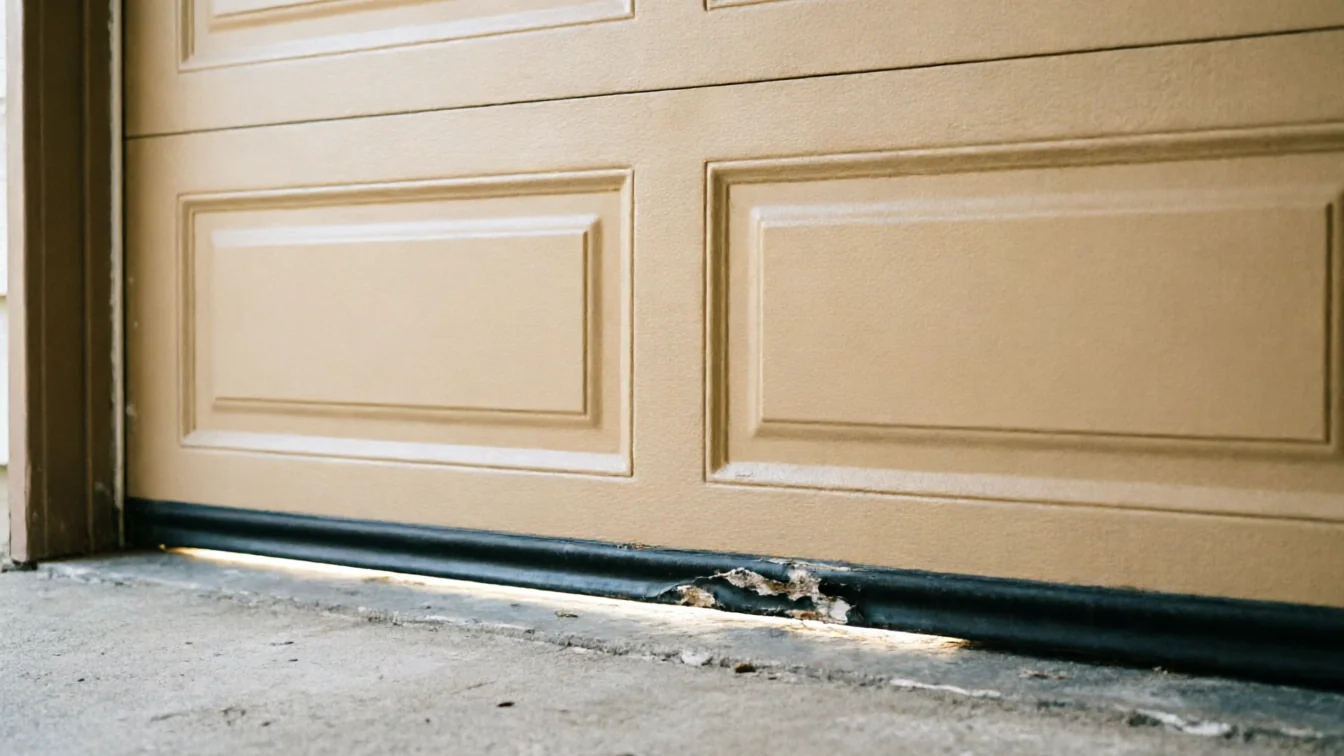
Most houses in this part of Norridge went up between 1938 and 1994, with the typical build year landing around 1967, which means the garage door weatherstripping on a lot of these doors was installed before today's synthetic rubber compounds existed. Across the 53 named areas that make up this stretch of the Chicago suburbs, Norridge's housing stock leans hardest into the 1960s and 70s wave of construction, the same years that produced steel sectional doors with thin aluminum astragals rather than the thicker vinyl bottom seals you'd see on a door built now. Norridge sits about a mile from Harwood Heights and two miles from Schiller Park, tucked into the inner ring of Cook County suburbs that filled in mostly after the war. A door that old has usually had its bottom seal replaced once, maybe twice, but the side and top perimeter seal - the strip that runs up the jambs and across the header - gets skipped because it's harder to see failing. That's the piece that lets a draft in around the edges instead of just under the door. The seal looks fine from six feet away. Up close, it's cracked, flattened on one side, or pulled half out of its track.roid
What You Pay
With roughly 82,048 owner-occupied houses across the service area and a median household income of $108,833, most Norridge owners are maintaining a door that's decades old rather than replacing it outright - a new bottom seal or side jamb weatherstrip is a smaller job than a full door swap, and it's usually the first thing worth trying before anything else. What a seal job costs depends on the door: a standard steel sectional needs a retrofit vinyl strip and track, while an older wood door needs a different profile that isn't always a stock item. We don't carry every obsolete astragal profile that Norridge builders used in the 1960s and 70s, so some jobs mean a universal retrofit kit instead of an exact match to what's already there - it seals the draft just as well, it just won't look identical to the original. A full weatherstrip kit, meaning a bottom seal plus two side pieces and a top seal, costs more than the bottom strip alone, but it's the only way to stop air coming in around the whole perimeter instead of just the bottom edge. If the door panel itself is warped or the track is bent, sealing it won't fix the draft - that's a different repair entirely, and it's worth saying so up front rather than selling a seal job that won't hold.
What Local Conditions Do
Norridge sits in a cold moderate climate band, which means the garage door seal goes through repeated freeze-thaw cycles most winters, not just one hard freeze and a thaw in spring. Rubber and vinyl weatherstripping contracts when it's cold and expands again once the garage warms up on a sunny afternoon, and that cycle, repeated for fifty-plus years on an original seal, is what cracks it rather than any one storm. On a steel sectional door, the metal panel itself contracts too, which can open a gap between the bottom seal and the slab that wasn't there in August. That gap is where the draft comes from - not a hole in the seal, just a seal that's shrunk enough it no longer makes contact with the door or the concrete. The 1960s and 70s stock that defines most of this area often has garages with a single layer of insulation in the door panel, or none at all, so a failed seal isn't just a comfort problem - it's the main path for outside air into an attached garage next to the house. The fix isn't insulation first. It's stopping the air path at the seal, then deciding if insulating the panel is worth it for that particular door.
Checking It Yourself
Close the door at night and run a hand along the bottom and both sides from inside the garage - if you feel moving air anywhere other than directly under the door, that's a side or top seal failing, not the bottom strip. A flashlight test works better after dark: have someone stand outside with a light while you watch for it from inside with the garage dark and the door shut. Light leaking through a specific spot means the seal's pulled away from the track right there, not a general wear problem across the whole door. Check where the vinyl meets the aluminum retainer on the bottom seal too - on doors from the 1960s-70s stock common here, that retainer corrodes before the vinyl itself gives out, and once it's bent the seal can't sit flat no matter how new it is. If the door's wood, look for the seal pulling nails loose along the jamb, which happens as the wood shrinks over the decades. None of this tells you whether the track or panel is also out of alignment - if the seal looks fine everywhere and you're still getting a draft, that's usually a gap between panels or a door that's not closing flush, and that's a different job than swapping weatherstrip.
Frequently asked questions
Why does my garage door let in cold air even though the bottom seal looks fine?
The bottom seal isn't the only one that matters. Side jamb seals and the top header seal fail quietly because they're less visible, and on a door from Norridge's 1960s-70s housing stock, those are usually original and brittle. Check them with a flashlight test at night before assuming the bottom strip is the problem.
Should I replace the whole door or just the seals?
If the panel and track are straight and the door closes flush, new seals usually solve a draft problem on their own. Replacing the whole door only makes sense if the panel's warped, the seal can't sit flat against bent track, or the door's old enough that parts for it are getting hard to source.
How often do garage door seals need replacing in Norridge?
There's no fixed schedule, but a seal that's original to a house built in the 1960s or 70s has likely gone through fifty-plus years of freeze-thaw cycles in a cold climate, which is well past what any vinyl or rubber seal is built to handle. If it's original, assume it needs checking.
Can I fix a draft myself or does it need a professional?
A straightforward bottom seal swap on a standard steel door is a reasonable DIY job if you can find the right track profile. Side and top perimeter seals, or any job where the retainer track itself is bent or corroded, usually goes faster and holds longer with a proper fit.
Related garage door services in Norridge
More garage door guides
Book garage door service in Norridge
Call now or request a quote - tell us what the door is doing and where you are.